
Our pets rely on us to keep them safe, especially during an emergency. While no one wants to imagine a house fire happening, having a plan before disaster strikes can make all the difference.
We spoke with the San Francisco Fire Department’s Public Information Office to learn what firefighters want every pet guardian to know about fire safety. From preparing an emergency kit to knowing what to do if your pet is trapped inside, these simple steps can help protect your loved ones during a fire.
1. If there’s a fire, get out and stay out of your home
If a fire breaks out, your first priority is getting yourself safely outside. If your pets are still inside, never re-enter a burning building to rescue them. Instead, stay outside and immediately tell firefighters:
- What type of pet you have
- How many pets are inside
- Where they were last seen
Firefighters are trained and equipped to search for pets as safely as conditions allow. Providing clear information helps them locate your pet as quickly as possible.
2. Tell firefighters where your pet likes to hide
Many pets instinctively hide when they’re frightened, especially when unfamiliar people enter the home. Think about your pet’s favorite hiding spots before an emergency happens. Do they hide under the bed? Behind the couch? Inside a closet? If firefighters need to search your home, letting them know where your pet is most likely to hide can save valuable time.
3. Have your pet examined by a vet after a fire
Even if your pet appears unharmed after a fire, it’s important to have them evaluated by a veterinarian as soon as possible. Smoke inhalation can affect animals more severely than you might realize, and many pets hide signs of pain or illness. In some cases, complications such as pulmonary edema, where fluids build up in the lungs and make it difficult to breathe, may not develop until days after a fire.
Watch for signs like:
- Difficulty breathing
- Lethargy
- Loss of appetite
- Refusing to drink water
- Soot on the face or body
These symptoms may indicate smoke inhalation or other injuries that require immediate veterinary care.
4. Prevent everyday fire hazards around the house
Many common household items can become safety hazards for curious pets. Help reduce the risk of injury by keeping pets away from:
- Exposed electrical wiring
- Hot stoves and ovens
- Hot irons and other heated appliances
Pets can easily burn sensitive noses and paws while exploring. Keeping these hazards out of reach and supervising pets around the home can help prevent fires and other accidents.
5. Make a plan before an emergency happens
The best time to prepare for a disaster is long before you ever need to evacuate. One of the easiest ways to help firefighters is by placing a pet rescue window decal near the entrance of your home. This decal lets first responders know that pets are inside and may need assistance if no one is home during an emergency.
It’s also a good idea to prepare a pet emergency “go” bag so you can evacuate quickly if needed.
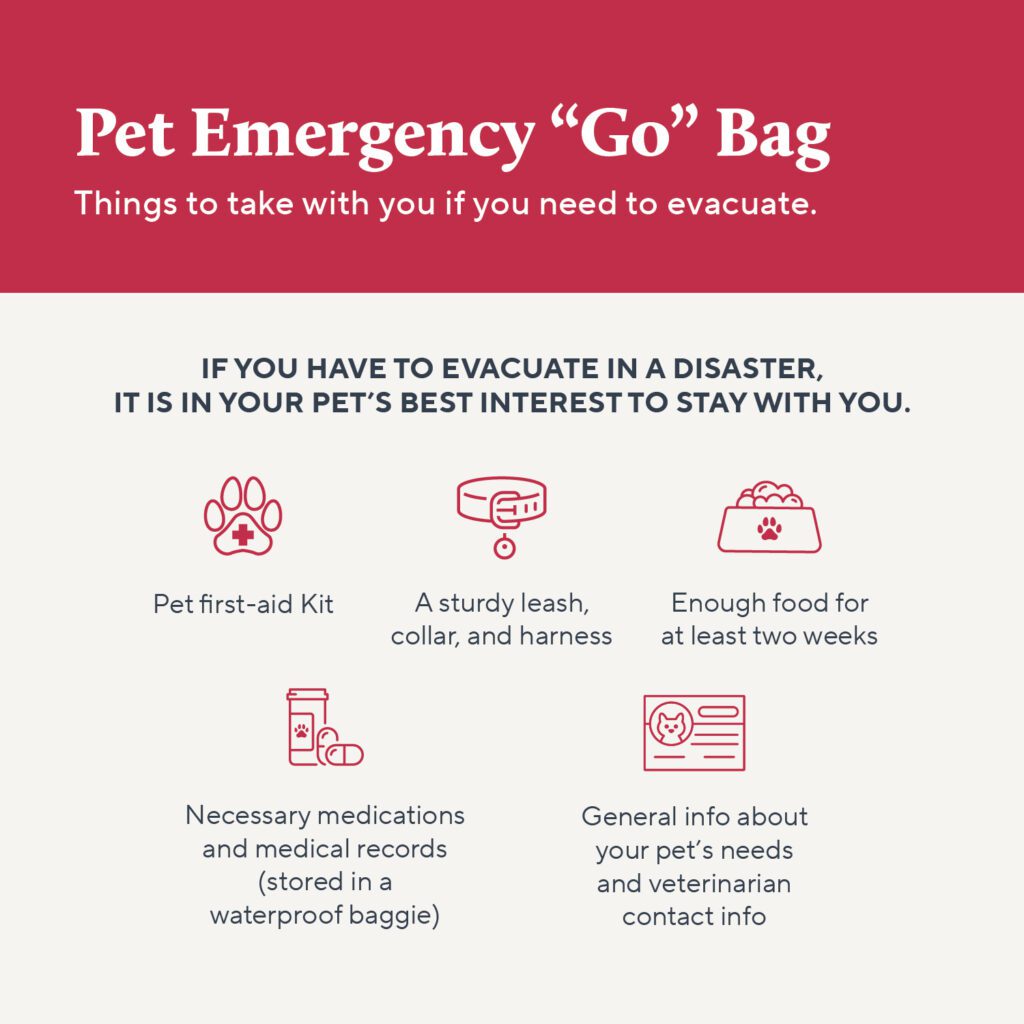
Your pet emergency “go” bag should include:
- A pet first-aid kit
- A sturdy leash, collar, and harness
- At least two weeks of food, treats, drinking water, and collapsible bowls
- Necessary medications and medical records stored in a waterproof bag
- Information about your pet’s needs, like their feeding schedule, medical conditions, medications, behavior, and your veterinarian’s contact information
A little preparation goes a long way
Emergencies happen without warning, but taking a few simple steps today can make a lifesaving difference tomorrow. By creating an evacuation plan, preparing a pet emergency kit, posting a pet rescue window decal, and knowing how to respond during a fire, you’ll be better prepared to protect your pets when they need you most. When every second counts, preparation helps keep every member of your family safe.