
Your pet relies on you for everything from food and exercise to comfort and care. In a disaster, they’ll rely on you even more. Earthquakes, wildfires, floods, power outages, and other emergencies can happen with little warning, and you may need to leave your home quickly.
The best time to make a plan for your pet is before you need one. A little preparation now can make an emergency less stressful for both you and your pet.
Steps to prep:
- Ensure your pet has a registered microchip and is wearing visible identification, like a collar with a current ID tag.
- Put together a “go” bag and a pet first-aid kit.
- Designate a trusted caregiver who can take your dog or cat in an emergency if you can’t get home to your pet.
- Research pet-friendly, overnight options so you know where you can go together safely if you have to evacuate.
- Practice your emergency plan with all members of your household (including your pets!).
Make sure your pet can be identified
An emergency can be frightening and disorienting, and even pets who normally stay close to you can run away when they’re scared.
Make sure your pet is:
- Microchipped: Register your pet’s microchip and keep your contact information up-to-date with the microchip company.
- Wearing identification: Your pet should wear a collar with a current ID tag whenever possible.
- Easy to identify: Keep several recent photos of your pet, along with a written description, in your emergency kit. These can be especially helpful if you become separated. It’s also a good idea to keep a copy of your pet’s microchip information and rabies certificate with your emergency documents.
Put together a “go” bag
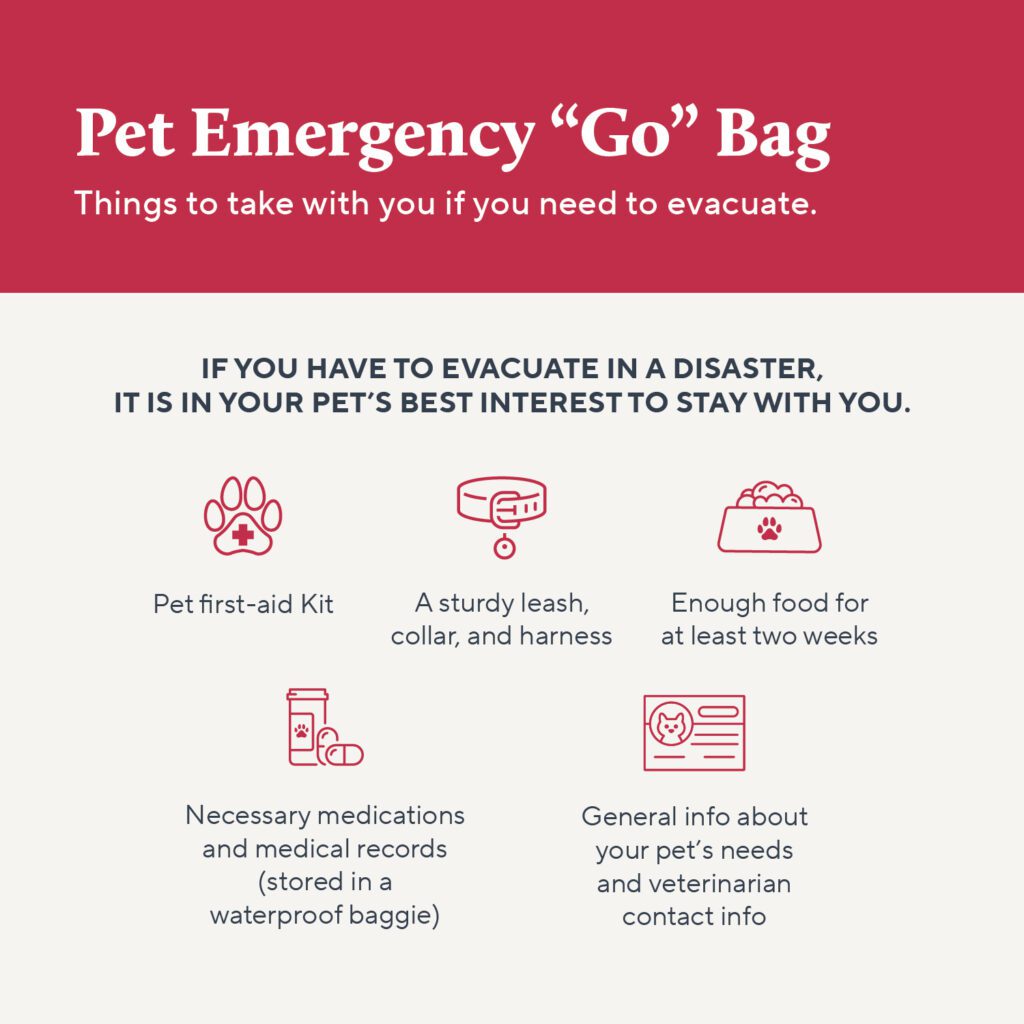
Keep a pet emergency kit somewhere that’s easy to grab on your way out the door. You may also want to keep a smaller kit in your car. Plan to have at least two weeks of supplies available, because you may not be able to return home or find your pet’s usual supplies right away. Here are some important items to include:
- A pet first-aid kit
- A sturdy leash, collar, and harness
- Enough food for at least two weeks, including favorite treats, drinking water, and collapsible bowls
- Any necessary medications along with copies of medical records, photos of your pet, microchip information, and a rabies certificate; keep these stored in a waterproof baggie
- Information on feeding schedules, medical conditions, behaviors, and the name and number of your vet
Don’t forget a pet first-aid kit
In addition to your pet’s emergency go-bag, you need to have a first-aid kit especially for their needs. Many of the items can be used for you as well.
- Gauze, cotton balls, scissors, rubber gloves, cotton swabs, and bandages
- Hydrogen peroxide (3%), which can clean wounds and also induce vomiting if your pet ingests something harmful
- Betadine antiseptic and/or Dermagel® spray that also has soothing pain relief ingredients
- Blood clotting styptic
- Eyewash
- Pet grooming wipes
- Instant warming and cold packs
- Duct tape
Plan a safe place to stay
If you need to evacuate, know where you and your pet can stay ahead of time. Not every hotel, emergency shelter, or other temporary accommodation allows pets. Make a plan with friends or relatives, or research which pet-friendly hotels are nearby.
Identify several options, such as:
- Friends or relatives who can accommodate you and your pet
- Pet-friendly hotels
- Other pet-friendly accommodations in or outside your area
Protect your pet during poor air quality
Wildfire smoke, home fire emergencies, and other air-quality emergencies can affect pets, too. Pay attention to local air-quality alerts and follow guidance from local officials.
When air quality is poor:
- Keep your pet indoors as much as possible.
- Take dogs outside only long enough to go potty when conditions are unsafe for extended outdoor activity.
- Replace walks and outdoor exercise with indoor enrichment, such as puzzle toys, training, or play.
- Keep windows and doors closed when appropriate based on local air-quality guidance.
- If your pet is showing signs of illness or distress, contact your veterinarian.
Helping your pet cope after an evacuation
Leaving home can be stressful for pets, particularly when they suddenly find themselves in an unfamiliar place. If you’re staying with friends or relatives, in a hotel, or somewhere else temporarily, try to give your pet as much consistency and security as possible.
Create a safe space
Give your pet a quiet area where they can retreat when they need a break. For cats, this could be their carrier, a covered hiding place, or another elevated or enclosed space where they feel secure. For dogs, a crate can provide a familiar place to relax, provided they are already comfortable using one.
Bring familiar things from home
A favorite blanket, bed, toy, or other familiar item can help your pet settle into a new environment. Try to maintain their usual feeding and sleep schedules as much as possible. Keeping some routines intact can give pets a sense of predictability when everything else has changed.
Keep your pet mentally engaged
Your normal walks and playtime may not be possible during an emergency, especially if you’re staying in a small space or air quality is poor. Instead, try short indoor play sessions, training exercises, puzzle toys, or other enrichment activities. These can give your pet something positive to focus on while also helping them use some of their physical and mental energy.
Practice your emergency plan
Having supplies is important but knowing what to do with them is just as important.
Take some time to:
- Make sure everyone in your household knows the evacuation plan.
- Keep your pet’s carrier, leash, harness, and emergency kit somewhere accessible.
- Make sure your pet is comfortable getting into their carrier or being secured with their leash and harness.
- Check your emergency supplies regularly and replace anything that has expired or been used.
- Confirm that your pet’s microchip and ID information are current.
- Review your plans periodically.
Most importantly: take your pet with you
If you’re ever told to evacuate, take your pet with you. Leaving a pet behind can put them at serious risk of injury, illness, or becoming lost, and you may not be able to return home as quickly as expected.
Preparing ahead of time means you won’t have to make these decisions in the middle of an emergency. Keep your pet’s go-bag ready, know where you can go together, and make sure the people in your support network know how to help.