
Good news for animals across California: Governor Gavin Newsom has signed AB 2010, the Spay and Neuter Improvements for Pets Act, also known as the SNIP Act, into law. The SNIP Act was introduced by Assemblymember Esmeralda Soria, co-authored by Senator Scott Wiener, and co-sponsored by the San Francisco SPCA, ASPCA, Animal Balance, and the San Diego Humane Society.
For the SF SPCA, this is an especially meaningful moment. Through Shelter PALS, our animal advocacy initiative, we work to advance policies that improve the lives of animals in San Francisco and throughout California. The SNIP Act is a great example of what can happen when animal welfare organizations, veterinary professionals, lawmakers, and advocates come together to address a problem at its source.
Why spay/neuter access matters
Spay/neuter surgery is one of the most effective tools we have to prevent unplanned litters and reduce pet overpopulation. But access to these services isn’t equal across California. In many rural and under-resourced communities, affordable spay and neuter appointments can be difficult to find or may be hours away. At the same time, veterinary teams are working to meet enormous demand with limited capacity.
When communities can’t access timely sterilization services, more animals can be born without guaranteed homes. Over time, that can contribute to more stray animals and surrendered pets, crowded shelters, and increased pressure on animal welfare organizations and local animal services.
The SNIP Act helps create solutions that can meet the scale of the problem.
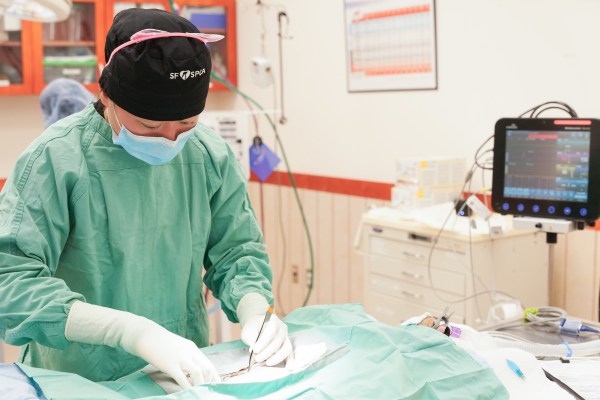
What does the SNIP Act (AB 2010) do?
When enacted, the SNIP Act will remove a regulatory barrier requiring high-volume spay/neuter (HVSN) surgeries to be performed in a dedicated surgical room and authorize Mobile Animal Sterilization Hospital (MASH) clinics.
The SNIP Act specifies that high-volume spay or neuter services—defined as the aseptic surgical sterilization by a veterinarian of 20 or more dogs, cats, rabbits, or any combination of those animals within 12 consecutive hours—need not be performed in a separate surgical room.
Why does that matter?
Before the SNIP Act, California’s premises requirements could prevent certain spay/neuter clinics from operating simply because a temporary location did not have a permanently separate surgical room. The SNIP Act removes that barrier and helps support high-volume spay and neuter clinics.
High-volume spay and neuter teams can perform surgeries more efficiently by using specialized workflows and techniques. MASH clinics can take that model into communities, setting up temporary operations in appropriate community spaces rather than relying on a permanent, dedicated surgical facility.
Importantly, the SNIP Act does not eliminate veterinary health and safety standards. The law specifically states that high-volume spay and neuter services must maintain rigorous standards of care and remain subject to other requirements governing the practice of veterinary medicine.
Bringing care where it’s needed
Surgical flexibility is especially valuable in rural areas and parts of the Central Valley, where access to affordable sterilization services can be limited.
Instead of requiring communities to have a permanent surgical facility before they can host a high-volume clinic, qualified veterinary teams can bring services closer to the animals and families who need them. That can mean more surgery availability, fewer unintended litters, and fewer animals entering already crowded shelters.
Advocacy in action
Improving animal welfare doesn’t only happen inside shelters, veterinary hospitals, or adoption centers. Sometimes, it happens in the halls of the state Capitol, where passing state laws can help change what’s possible for animals and communities across California.
Through Shelter PALS, the SF SPCA and our partners advocate for policies that create a better future for animals and the people who care for them. The SNIP Act is one example of how policy change can expand access to care, strengthen communities, and help prevent animal suffering before it starts.
The SNIP Act is a practical step toward expanding access to spay/neuter services and addressing the underlying causes of shelter overcrowding. We’re proud to have been part of the coalition that helped the SNIP Act cross the finish line, and we’re grateful to everyone who advocated alongside us.